The world of supercars has always captivated automotive enthusiasts with its blend of performance, design, and cutting-edge technology. From the roar of a V8 engine to the sleek lines of an aerodynamic chassis, supercars represent the ultimate expression of engineering excellence. This article will take you on a journey through the evolution of supercars, exploring key models, influential manufacturers, and the innovations that have transformed the automotive industry.
The Dawn of Supercars
The term “supercar” emerged in the 1960s, referring to high-performance vehicles that surpassed the capabilities of standard sports cars. One of the first examples was the Lamborghini Miura, introduced in 1966. The Miura featured a mid-engine layout, a design that would become a hallmark of many future supercars. With its stunning looks and impressive performance, the Miura set a new standard for what a sports car could be, blending aesthetics with power.
In the years that followed, manufacturers began to push the boundaries of automotive engineering. The Ferrari 246 GT and the Ford GT40 were instrumental in the development of supercars. The GT40, known for its dominance at the 24 Hours of Le Mans, showcased the potential of American muscle combined with European flair. This period marked the beginning of fierce competition among manufacturers to produce faster, more powerful vehicles.
Iconic Models and Manufacturers
As the automotive industry progressed, several manufacturers emerged as leaders in the supercar segment, each contributing to the landscape in unique ways. Ferrari, Lamborghini, Porsche, and McLaren are just a few names synonymous with high performance and luxury.
Ferrari: The Epitome of Performance
Ferrari has long been regarded as the pinnacle of supercar manufacturing. Models like the Ferrari 488 GTB and the LaFerrari have defined what it means to be a supercar. The 488 GTB, with its twin-turbocharged V8 engine, delivers breathtaking acceleration and handling, while the LaFerrari showcases the brand’s commitment to innovation with its hybrid technology, combining a V12 engine with electric motors for extraordinary performance.
Lamborghini: Aggression Meets Luxury
Lamborghini’s signature design philosophy focuses on aggressive styling and powerful engines. The Lamborghini Huracán and Aventador are prime examples of this ethos. The Huracán’s sleek lines and naturally aspirated V10 engine deliver exhilarating performance, while the Aventador, with its striking design and V12 power, remains an icon in the supercar world. Lamborghini continues to push boundaries, as seen with the limited-edition Sián, which incorporates hybrid technology for enhanced efficiency.
Porsche: Engineering Mastery
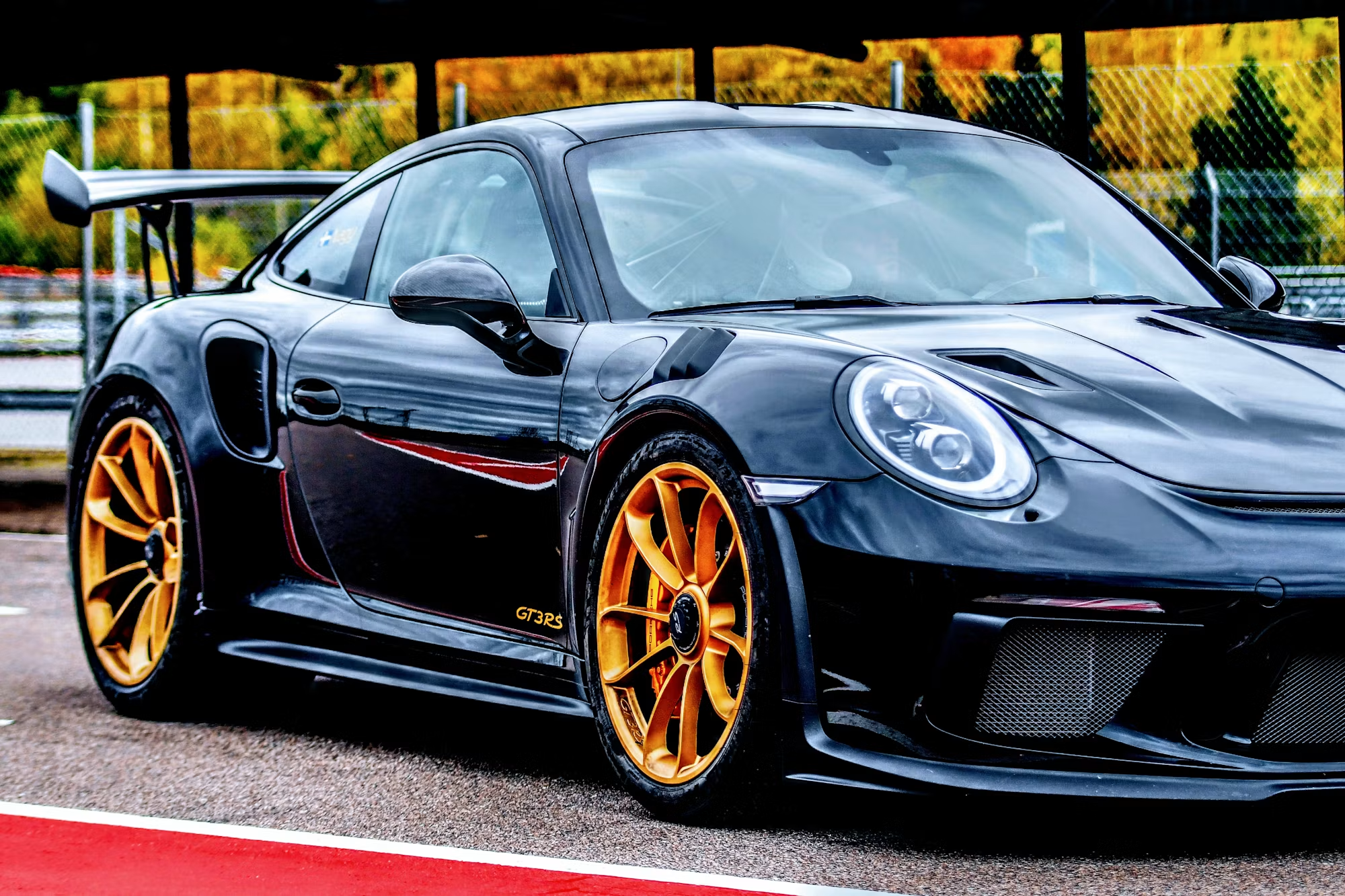
Porsche has made significant strides in the supercar realm, particularly with the legendary 911 Turbo S and the groundbreaking 918 Spyder. The 911 Turbo S is renowned for its precise handling and exceptional performance, making it a favorite among driving enthusiasts. On the other hand, the 918 Spyder represents a pivotal moment in automotive history, blending hybrid technology with supercar performance, proving that sustainability and speed can coexist.
McLaren: Innovation at Its Core
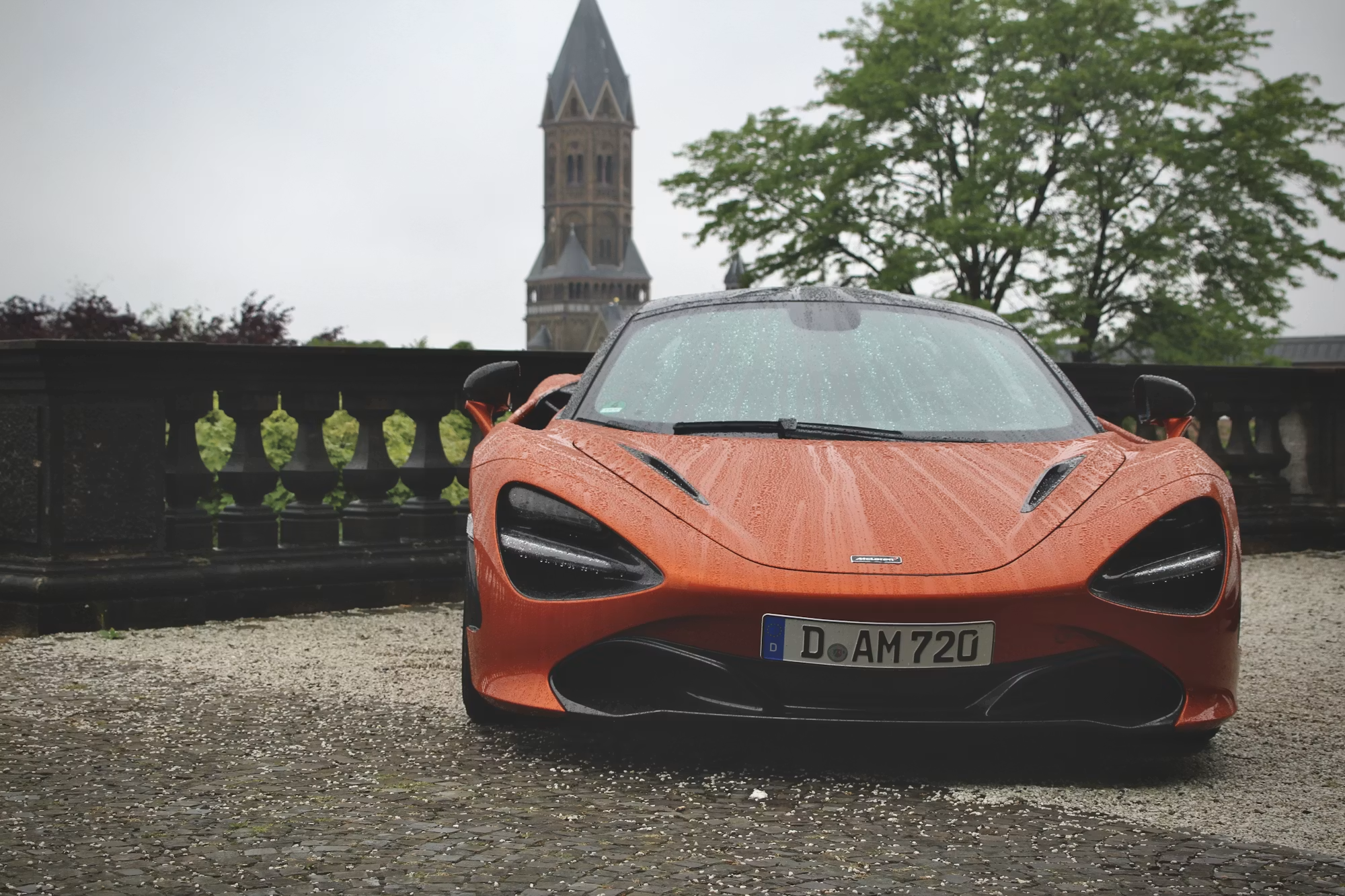
McLaren’s dedication to innovation is evident in models like the McLaren P1 and the 720S. The P1, a hybrid hypercar, embodies the company’s engineering prowess, combining a twin-turbo V8 with an electric motor to produce staggering power. The 720S, with its lightweight construction and advanced aerodynamics, redefined performance benchmarks, demonstrating McLaren’s commitment to pushing the envelope in supercar design.
The Emergence of Hypercars
As technology advanced, the supercar segment evolved into what we now refer to as hypercars. These vehicles push the limits of speed and performance even further, often incorporating cutting-edge materials and technologies. Brands like Bugatti, Koenigsegg, and Rimac have taken center stage in this arena.
Bugatti: Unmatched Speed
Bugatti is synonymous with extreme performance, particularly with models like the Chiron and the Veyron. The Chiron, with its quad-turbocharged W16 engine, boasts a top speed of over 300 mph, making it one of the fastest production cars in the world. Bugatti’s focus on luxury and performance creates a unique blend that few can match, establishing the brand as a leader in the hypercar segment.
Koenigsegg: Pioneering Technology
Koenigsegg is known for its innovative approach to hypercar design. Models like the Jesko and Regera incorporate advanced engineering techniques and materials, including carbon fiber and lightweight construction, to achieve remarkable performance. The Jesko, with its focus on aerodynamics and handling, showcases the brand’s commitment to pushing boundaries, while the Regera’s unique direct drive system redefines traditional power delivery methods.
Rimac: The Electric Revolution
Rimac Automobili is at the forefront of the electric hypercar movement with models like the Rimac C_Two. This all-electric hypercar features incredible performance figures, with a 0-60 mph time of under 2 seconds. Rimac’s dedication to innovation and sustainability demonstrates how electric vehicles can rival traditional combustion engines in the supercar realm.
The Future of Supercars
Looking ahead, the future of supercars is poised for further evolution. The integration of electric and hybrid technologies is becoming increasingly prevalent, as manufacturers recognize the importance of sustainability. Models like the Ferrari SF90 Stradale and the Mercedes-AMG One highlight the industry’s shift towards electrification while maintaining high performance.
Moreover, advancements in autonomous driving technology are likely to play a role in the future of supercars. While traditional driving enthusiasts cherish the connection between man and machine, manufacturers are exploring how autonomous features can enhance safety and convenience without compromising the thrill of driving.
A New Era of Performance
As we embrace a new era in the automotive industry, supercars will continue to captivate enthusiasts and redefine what is possible in terms of performance and design. The pursuit of speed, luxury, and innovation will drive manufacturers to explore new horizons, ensuring that the legacy of supercars remains vibrant.
In conclusion, the evolution of supercars is a testament to human ingenuity and the relentless pursuit of excellence. From the early days of the Lamborghini Miura to the cutting-edge technologies of today, supercars have continuously pushed the boundaries of what is possible. As we look to the future, we can expect even more exciting developments in this dynamic and exhilarating segment of the automotive world.